

 Course Catalog
 Laura Artman
Fermented Foods: 25 Essential Picks for Gut Health
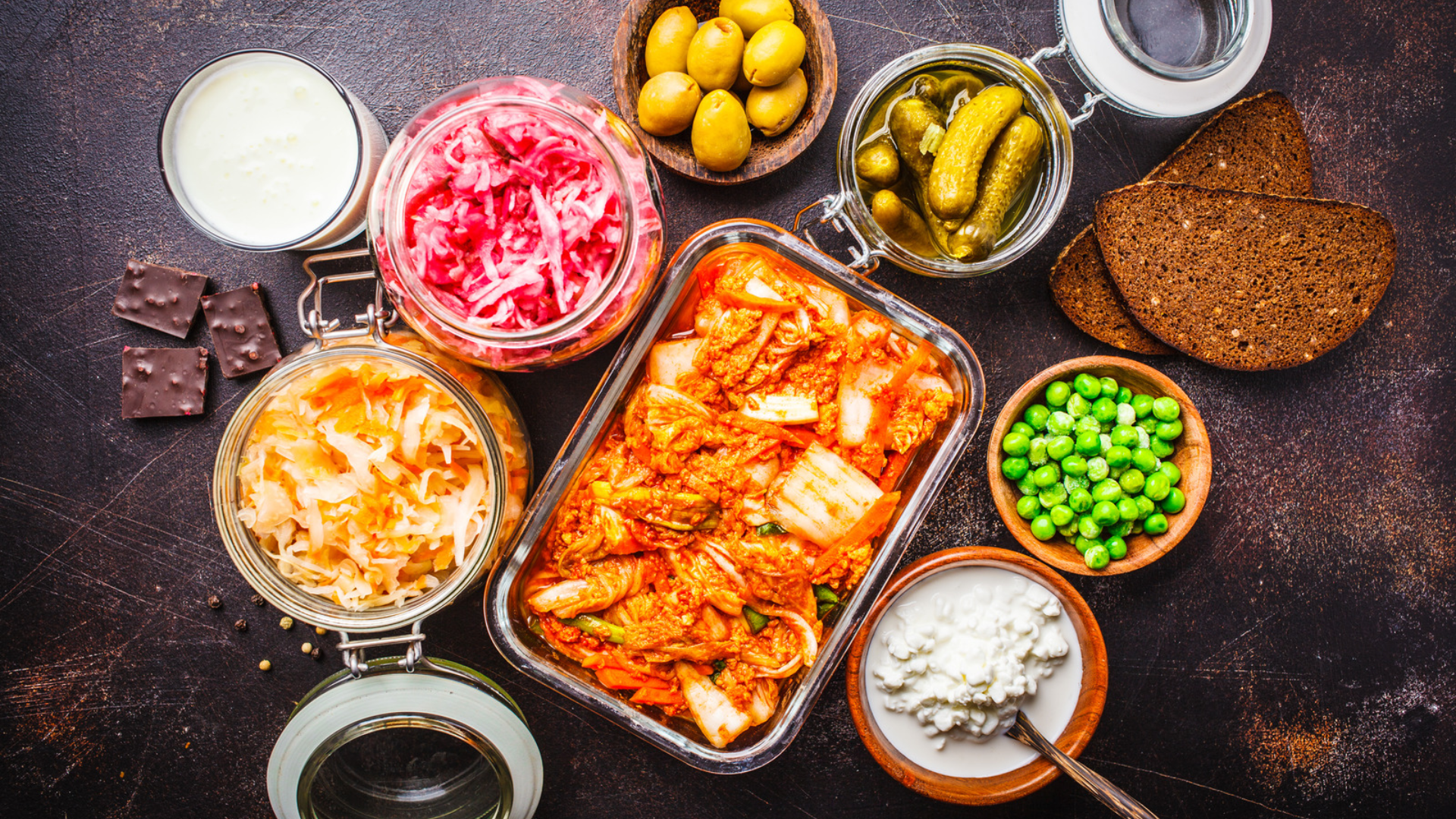
Fermented foods and gut health are now studied together in peer-reviewed research from Stanford and Harvard. This article covers what four of those studies found, and the appendix lists 25 fermented foods.
What Stanford Tested With Fermented Foods
In 2021, Stanford researchers published a randomized trial in the journal Cell. 36 healthy adults were randomly assigned to a 10-week diet that included either fermented foods or high-fiber foods. Participants slowly increased their intake over 4 weeks, then followed the full diet for 6 more weeks.
The fermented foods in the trial were yogurt, kefir, cottage cheese, kimchi, other types of fermented vegetables, and kombucha. The researchers tracked gut microbiome diversity and blood markers of inflammation throughout.
What Happened to Gut Health
The fermented-food diet had a clear effect. It steadily increased microbiota diversity and decreased inflammatory markers. Larger servings of fermented foods produced stronger increases in diversity.
The study's authors noted that microbes in the gut feed on fiber and produce byproducts such as short-chain fatty acids, which can reduce inflammation. The Stanford team therefore expected the high-fiber diet to have a big impact on the microbiome.
The High-Fiber Comparison
The high-fiber group did not match that expectation. Their microbial diversity showed few changes. None of the 19 inflammatory proteins measured decreased in the high-fiber group.
The fiber group did show a different change. Microbiome-encoded enzymes that break down plant carbohydrates increased, even though overall community diversity stayed stable. The researchers also found that three distinct immune trajectories in high-fiber consumers corresponded to baseline microbiota diversity. People who started with higher diversity had reductions in inflammation on the high-fiber diet, while those with the least diversity had slight increases.
Fermented Foods Versus Probiotic Supplements
A second Stanford study, published in Gut Microbes in 2023, tested a probiotic supplement rather than fermented foods. It was an 18-week randomized study of a probiotic versus placebo in 39 adults with elevated parameters of metabolic syndrome.
The probiotic did not change metabolic syndrome markers across the whole group, but a subset of probiotic participants improved in triglycerides and diastolic blood pressure. These responders had a distinct microbiome profile, and diet was a key factor separating them from non-responders. The authors concluded that dietary factors may enhance the stability and efficacy of the supplement. This study did not test fermented foods, so it speaks to probiotics and diet rather than to any fermented food.
The Wider Diet Around Gut Health
Two Harvard-affiliated studies looked at overall dietary patterns rather than fermented foods. In a Nature Medicine paper, researchers analyzed 307 men from the Health Professionals Follow-Up Study, who each provided up to four stool samples. The finding was that the protective association between Mediterranean diet adherence and cardiometabolic disease risk was significantly stronger among participants with decreased Prevotella copri. Gut microbes, in other words, can change how much a diet protects.
A second Nature Medicine study, co-senior authored by Harvard and Massachusetts General Hospital researchers, examined 1,098 deeply phenotyped individuals. Participants who ate a diet rich in healthy plant-based foods were more likely to have high levels of favorable gut microbes, while diets with more highly processed plant-based foods were linked to unfavorable microbes. Quality of the overall diet, not just the presence of plant foods, was associated with the gut microbiome.
What the Research Does and Does Not Show
Only the 2021 Stanford trial tested fermented foods directly, and it enrolled healthy adults over 10 weeks. The Harvard studies are observational and describe associations between diet and microbes. The 2023 Stanford study tested a probiotic supplement. None of these four studies tested the full list of foods in the appendix below.
Taken together, the findings suggest that fermented foods are one dietary route to a more diverse gut microbiome, and that the overall dietary pattern shapes how the gut responds. For readers interested in fermented foods and gut health, the appendix lists 25 options.
Appendix: 25 Fermented Foods
- Yogurt*
- Kefir*
- Cottage cheese*
- Kimchi*
- Kombucha*
- Sauerkraut
- Miso
- Tempeh
- Natto
- Brine-fermented pickles
- Cultured buttermilk
- Sourdough bread
- Aged cheese (Gouda, cheddar)
- Labneh
- Skyr
- Lassi
- Kvass
- Water kefir
- Doenjang
- Gochujang
- Curtido
- Idli
- Injera
- Tepache
- Fermented hot sauce
* Named in the Stanford 2021 trial. The trial also used "other types of fermented vegetables" as a category. The remaining foods were not tested in the studies cited in this article.
References
References
- Wastyk HC, et al. Gut-microbiota-targeted diets modulate human immune status. Cell. 2021. doi:10.1016/j.cell.2021.06.019
https://www.cell.com/cell/fulltext/S0092-8674(21)00754-6 - Wastyk HC, Perelman D, Topf M, Fragiadakis GK, Robinson JL, Sonnenburg JL, Gardner CD, Sonnenburg ED. Randomized controlled trial demonstrates response to a probiotic intervention for metabolic syndrome that may correspond to diet. Gut Microbes. 2023;15(1):2178794. doi:10.1080/19490976.2023.2178794
https://www.ncbi.nlm.nih.gov/pmc/articles/PMC9980610/ - Wang DD, Nguyen LH, Li Y, Yan Y, Ma W, Rinott E, Ivey KL, Shai I, Willett WC, Hu FB, Rimm EB, Stampfer MJ, Chan AT, Huttenhower C. The gut microbiome modulates the protective association between a Mediterranean diet and cardiometabolic disease risk. Nat Med. 2021;27(2):333-343. doi:10.1038/s41591-020-01223-3
https://www.nature.com/articles/s41591-020-01223-3 - Asnicar F, Berry SE, et al. Microbiome connections with host metabolism and habitual diet from 1,098 deeply phenotyped individuals. Nat Med. 2021. doi:10.1038/s41591-020-01183-8
https://www.nature.com/articles/s41591-020-01183-8
Gebruikersnaam


 Dutch
 English
 Arabic
 French
 Spanish
 Portuguese
 Deutsch
 Turkish
 Italiano
 Russian
 Romaian
 Portuguese (Brazil)
 Greek